From Torchlight Procession to the Biggest Party in the Country: The Story of Luxembourg’s National Day Street Celebrations
Every year on the evening of 22nd June, Luxembourg transforms.
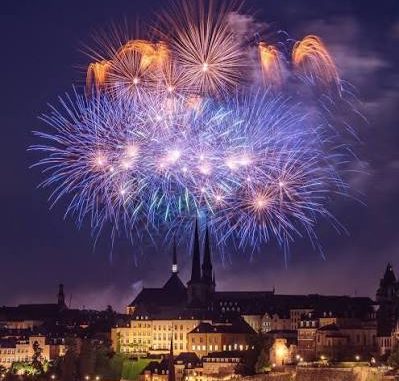
As the sun begins to set, thousands of people pour into the streets of the capital. Music fills the squares, terraces overflow with conversation, and a festive atmosphere spreads across the city centre. By the time the fireworks illuminate the sky above the Adolphe Bridge, Luxembourg City has become one giant open-air celebration.
For many people, the street party on 22 June feels like a tradition that has existed forever. Yet the event we know today is the result of more than a century of evolution, combining royal ceremony, civic pride, local traditions and a uniquely Luxembourgish love of celebrating together.
It All Started With a Birthday
The origins of Luxembourg’s National Day are not national at all—they are royal.
Since the early nineteenth century, Luxembourgers have celebrated the birthday of the reigning sovereign. The date changed regularly depending on who occupied the throne. Under different rulers, the official celebration was held in April, June, July, December and even January.
When Grand Duchess Charlotte came to the throne in 1919, National Day was celebrated on 23 January, her actual birthday. While the occasion was patriotic and popular, winter weather often limited outdoor festivities.
Everything changed in 1961 when a Grand Ducal decree established 23 June as the permanent date for the official celebration of the sovereign’s birthday. The decision was largely practical: summer weather was far better suited to public ceremonies and outdoor events. More than sixty years later, Luxembourg still celebrates National Day on that date, regardless of the Grand Duke’s actual birthday.
The Fakelzuch: The Heart of the Celebration
Long before large concert stages and packed city-centre terraces, the centrepiece of National Day Eve was the Fakelzuch.
The torchlight procession has roots in older civic and ceremonial traditions. Local associations, brass bands, folklore groups and community organisations would march through the capital carrying torches and lanterns, creating a spectacle of light and music through the streets.
Today, the Fakelzuch remains one of the most important symbols of National Day. Thousands of participants parade through the city before the Grand Ducal family, continuing a tradition that links modern Luxembourg with generations of citizens who came before them.
How a Ceremony Became a Street Party
Interestingly, nobody ever officially created Luxembourg’s famous National Day street party.
The transformation happened gradually.
As the National Day celebrations moved permanently to June after 1961, larger crowds began attending the torchlight procession and fireworks. Instead of heading home after the official events, people stayed in the city centre. Cafés and restaurants remained open later, terraces filled with residents and visitors, and spontaneous celebrations continued long into the night.
By the 1970s, National Day Eve had become one of the busiest evenings of the year in Luxembourg City. During the 1980s and 1990s, the atmosphere expanded further with outdoor concerts, entertainment stages and increasing participation from Luxembourg’s growing international population.
What began as a ceremonial gathering slowly evolved into a genuine public festival.
A Celebration That Belongs to Everyone
One of the most remarkable aspects of National Day is that it has grown far beyond its royal origins.
While the official ceremonies on 23 June still include military parades, state events and appearances by the Grand Ducal family, the evening of 22 June has become a celebration of Luxembourg itself.
Luxembourgers, cross-border workers, expatriates, international residents and visitors all share the same streets, squares and terraces. It is perhaps the country’s most visible expression of the multicultural society Luxembourg has become.
In many ways, the street party reflects modern Luxembourg better than any official ceremony. It is open, international, welcoming and proudly local at the same time.
The Biggest Night of the Year
Today, the eve of National Day is widely regarded as the largest public celebration in Luxembourg.
The programme still revolves around the traditional ingredients that have shaped the event for decades: the Fakelzuch, live music, public gatherings and the spectacular fireworks display. Yet the real attraction is the atmosphere itself.
What started as a celebration of a sovereign’s birthday has become something much larger—a national gathering that brings together people from every corner of Luxembourg and beyond.
And perhaps that is why the tradition has endured.
Because while the official National Day falls on 23 June, for many people in Luxembourg, the true celebration begins the night before, when the city becomes one giant street party and an entire country comes together under the summer sky.